

Debt Bible Verse: What Scripture Really Teaches About Borrowing, Lending, and Financial Stewardship
Answering Your Question Quickly: What Does the Bible Say About Debt?
The Bible treats debt as dangerous and constraining—but not as an automatic sin. Proverbs 22:7 puts it bluntly: “The rich rule over the poor, and the borrower is slave to the lender.” That’s not a metaphor. It’s a description of how debt reshapes power dynamics and limits your future choices. At the same time, Scripture never issues a blanket “never borrow” command. What it does, consistently, is call us to responsibility, contentment, and clear-eyed awareness of what we’re trading when we sign on the dotted line.
Romans 13:8 tells us to “owe no one anything, except to love each other.” Deuteronomy 28:12 frames lending—not borrowing—as a sign of covenant blessing, promising that God’s people would “lend to many nations but borrow from none.” These bible verses about debt aren’t primarily about math or interest rates. They’re about freedom, trust, and where our security actually comes from.
Here’s where this lands for everyday life: that credit card balance, the student loans, the mortgage—each one represents a claim on your future labor, your margin, and your options. The Bible doesn’t say you’re wicked for having a mortgage. But it does say the wicked borrows and does not repay (Psalm 37:21). It warns that whoever shakes hands in pledge for a stranger’s debt will suffer (Proverbs 11:15). It insists that the righteous are generous and give, rather than always needing to take.
Our perspective at Openhanded Wealth is straightforward: Christians are stewards under God’s ownership. That means every dollar you borrow or lend is a moral decision, not a neutral one. Your heavenly father cares about the details of your financial life—not to burden you with guilt, but because money shapes formation, generosity, and freedom.
If you’re looking for a debt bible verse to memorize, Proverbs 22:7 is a solid starting point. But the goal isn’t to master a proof text. It’s to understand the whole biblical framework for borrowing, lending, and living with margin. That’s what we’ll walk through in the rest of this article.

What Is Debt in the Bible? Definitions, Context, and Modern Parallels
Debt, at its simplest, means owing something to someone else—usually money—with a binding obligation to repay. That definition hasn’t changed much in three thousand years. What has changed is the economic system around it.
In ancient Israel, debt was tied to land, harvests, and family survival. The economy was agrarian and clan-based. When a drought hit or crops failed, families borrowed grain or money to survive until the next season. In Nehemiah 5:3–5, Israelites cried out because they were mortgaging fields, vineyards, and homes just to buy grain during a famine—and some were even selling their children into servitude to pay off debts. This wasn’t lifestyle inflation. It was desperation.
The widow in 2 Kings 4:1–7 faced a similar crisis. Her husband had died, leaving debts, and the creditor was coming to take her two sons as slaves. The prophet Elisha instructed her to borrow empty vessels from neighbors, then miraculously multiplied oil to fill them. She sold the oil, paid her debts, and her family survived. Notice: the borrowing was specifically limited to what she needed to generate income and pay what she owed.
The Bible rarely calls financial debt itself “sin.” But it repeatedly warns about its spiritual and social consequences—loss of freedom, exploitation of the poor, anxiety, and strained relationships. Debt in Scripture shows up in several categories: personal loans between fellow Israelites (often interest-free), commercial lending to a foreigner (where interest could be charged), pledges and collateral (like a neighbor’s cloak held overnight), and the extreme case of debt-slavery when someone couldn’t repay.
Now consider modern parallels. Credit cards and payday loans function much like the exploitative lending the Old Testament prophets condemned—charging predatory interest, trapping the poor and the borrower in cycles of debt they cannot escape. A certain moneylender charging 400% APR isn’t far from what Nehemiah confronted. Mortgages and student loans occupy a different category: they’re often used to acquire assets (a home, an education) that can increase earning capacity. But even here, the Bible’s warnings apply. A thirty-year mortgage still makes you a borrower, with all the constraints that implies. Medical debt and business lines of credit add further complexity—sometimes unavoidable, sometimes unwise.
The bridge between ancient and modern isn’t perfect, but the principles travel. Debt constrains freedom. Debt creates claims on future labor. Debt can become a trap for the vulnerable. And debt always involves a relationship—between borrower and lender—that the Bible takes seriously.
Major Debt Bible Verses and What They Teach
This section isn’t an exhaustive concordance. It’s a curated short list of foundational bible verses that shape how we should think about debt, lending, and responsibility. Each verse reveals something about God’s heart for justice, freedom, and stewardship.
Proverbs 22:7 remains the anchor text: “The rich rule over the poor, and the borrower is slave to the lender.” This isn’t moralizing—it’s describing reality. When you owe money, the lender has power over your time, your decisions, and your margin. You cannot freely give, save, or respond to opportunity when your cash flow is obligated elsewhere. The warning isn’t that borrowing is forbidden, but that it carries a cost most people underestimate.
Romans 13:7–8 says, “Pay to all what is owed to them: taxes to whom taxes are due, revenue to whom revenue is due, respect to whom respect is due, honor to whom honor is due. Owe no one anything, except to love each other, for the one who loves another has fulfilled the law.” This passage is often cited as a prohibition on all debt, but read in context, it’s about fulfilling obligations. If you owe taxes, pay taxes. If revenue, then revenue. If honor, then honor. The point is that debt creates a binding duty—and the only debt that should remain outstanding is the continuing debt to love one another.
Deuteronomy 15:1–2 and 15:7–11 establish the sabbatical debt release: every seven years, debts among Israelites were to be canceled. This wasn’t about rewarding irresponsibility—it was a structural reset to prevent permanent underclasses and ensure cyclical opportunity. God commanded generosity to the poor, even as the sabbatical year approached, warning against a “grudging heart” that would withhold good from those in need.
Deuteronomy 28:12–13 frames lending as blessing and borrowing as constraint: “The Lord will open to you his good treasury, the heavens, to give the rain to your land in its season and to bless all the work of your hands. And you shall lend to many nations, but you shall not borrow.” Lending meant surplus, stability, and influence among all the nations. Borrowing signaled vulnerability.
Exodus 22:25–27 and Leviticus 25:35–37 prohibit charging interest to the poor and require returning a debtor’s only covering—their neighbor’s cloak—before nightfall. To exact interest from the vulnerable was to exploit their desperation. God’s law protected the weak, not the profit margin of the lender.
Psalm 37:21 draws a line of character: “The wicked borrows but does not pay back, but the righteous is generous and gives.” The issue isn’t whether you borrow; it’s whether you fulfill your obligations and live with open hands.
What emerges from these biblical references is a consistent pattern: debt is bondage, repayment is righteousness, protection of the vulnerable is non-negotiable, and trusting money over God leads to ruin. The foolish man devours everything he has, while a good man leaves an inheritance for his children’s children.
Borrowing, Lending, and Guarantees: How Scripture Frames Financial Risk
In the Bible, the problem with debt is rarely about the math. It’s almost always about presumption, power, and pressure.
Proverbs 22:26–27 warns, “Be not one of those who give pledges, who put up security for debts. If you have nothing with which to pay, why should your bed be taken from under you?” This is one of the clearest prohibitions in Scripture: don’t guarantee someone else’s debt. When you cosign, you accept full liability for an outcome you don’t control. If they default, you pay. The verse asks a practical question: if you don’t have enough money to cover the obligation yourself, why would you risk your family’s stability?
Proverbs 11:15 reinforces this: “Whoever puts up security for a stranger will surely suffer harm, but he who hates to be someone who shakes hands in pledge is secure.” And Proverbs 17:18 adds, “One who lacks sense gives a pledge and puts up security in the presence of his neighbor.” Cosigning isn’t just unwise—Scripture treats it as foolish, a failure of discernment.
Proverbs 6:1–5 goes further. If you’ve already pledged security for a neighbor’s debt, the instruction is urgent: “Save yourself like a gazelle from the hand of the hunter.” Go, humble yourself, plead with your neighbor to release you. Don’t sleep until you’re free from the trap. This applies directly to modern cosigning—whether for a relative’s car loan, a friend’s apartment lease, or a business debt secured by your personal home.
James 4:13–15 addresses the spiritual root of overleveraging: “Come now, you who say, ‘Today or tomorrow we will go into such and such a town and spend a year there and trade and make a profit’—yet you do not know what tomorrow will bring… Instead you ought to say, ‘If the lord wills, we will live and do this or that.’” Borrowing based on optimistic income projections—assuming next year’s bonus, counting on a business doubling—violates this principle. You’re presuming on the future rather than trusting God with the uncertainty.
Here’s a concrete example: A family in 2019 agreed to guarantee a relative’s small business loan—$75,000 secured by their home equity. The relative’s business seemed stable. Then COVID-19 shutdowns hit in early 2020, the business collapsed, and the family lost their savings and faced foreclosure. The math looked fine in January. By April, they were trapped.
But lending itself isn’t forbidden. Scripture acknowledges that the righteous do lend money. Psalm 112:5 says, “It is well with the man who deals generously and lends.” Psalm 37:26 notes that a good man is “ever lending generously, and his children become a blessing.” Matthew 5:42 instructs, “Give to the one who begs from you, and do not refuse the one who would borrow from you.” Luke 6:34–35 pushes further, urging us to lend even when we expect nothing in return.
The difference is posture. Wise lending comes from surplus and generosity, not from extracting profit from the desperate. And wise borrowing counts the cost before breaking ground.

Debt, Ownership, and Spiritual Stewardship
If God owns everything—and Psalm 24:1 says He does—then our debt decisions are spiritual acts of stewardship, not merely financial tactics.
Romans 13:8’s instruction to let no debt remain outstanding except the continuing debt to love one another takes on new weight in this framework. Long-term consumer debt competes with our capacity to fulfill that calling. When most of your margin goes to servicing credit cards, car loans, and lifestyle debt, you cannot freely love, give, or respond to needs around you. You’re functionally owned by your lenders.
Matthew 6:24 makes the stakes explicit: “No one can serve two masters, for either he will hate the one and love the other, or he will be devoted to the one and despise the other. You cannot serve God and money.” Debt doesn’t just limit your budget. It divides your loyalty. The borrower’s allegiance is split between God’s direction and the lender’s demands.
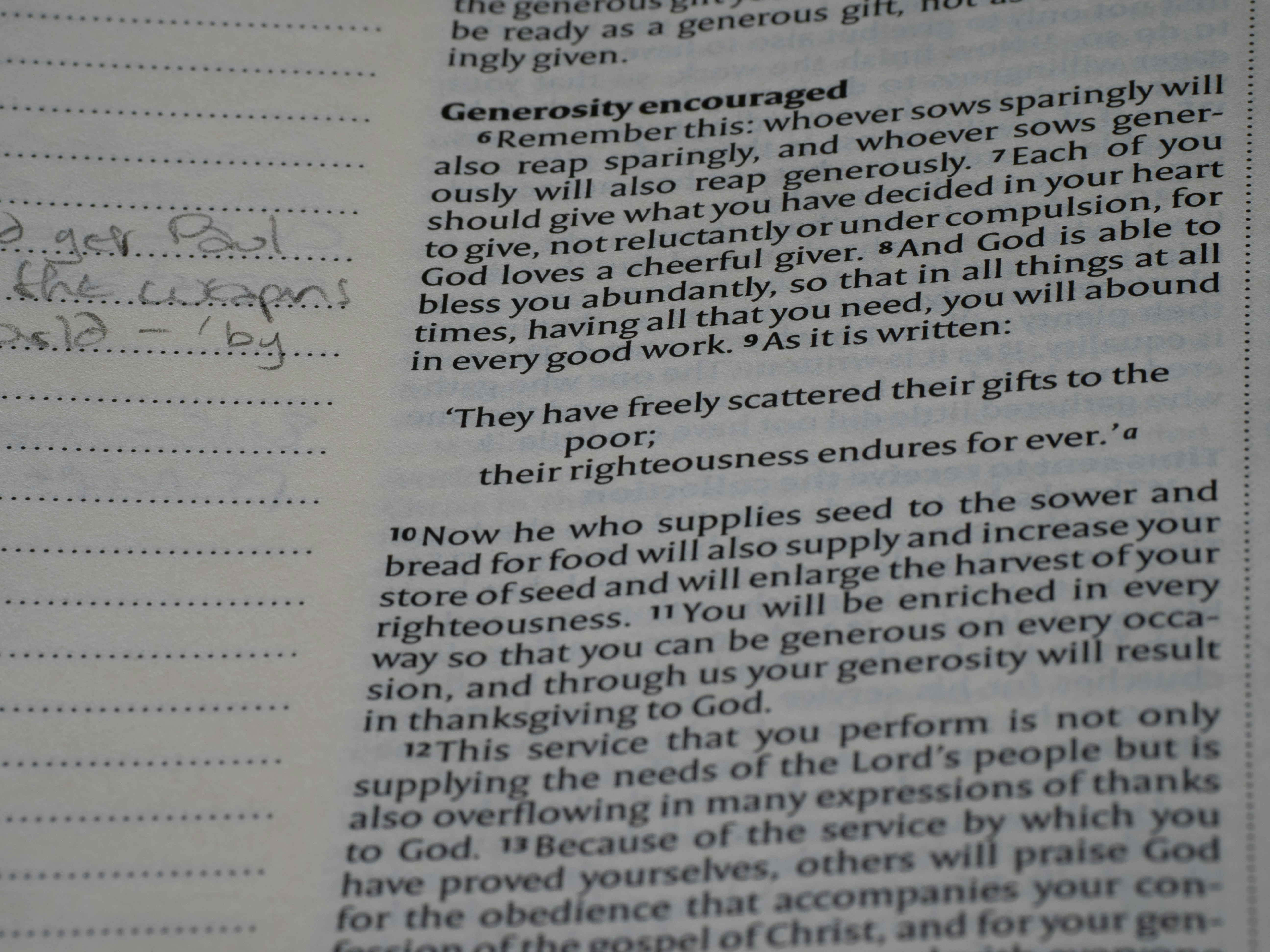
This isn’t abstract theology. Consider how ongoing consumer debt crowds out generosity. Paul writes in 2 Corinthians 9:8 that God provides abundantly “so that having all sufficiency in all things at all times, you may abound in every good work.” But when your income is pre-committed to debt service, you cannot abound. You’re operating at a deficit before you even get paid.
Debt also eliminates the margin required for Sabbath rest. You cannot take a slower season, say no to overtime, or respond to unexpected opportunities when every dollar is spoken for. The financial pressure creates spiritual pressure—a life free from rest, always running, never catching up.
Luke 16:10–11 connects financial faithfulness to spiritual capacity: “One who is faithful in a very little is also faithful in much… If then you have not been faithful in the unrighteous wealth, who will entrust to you the true riches?” How you handle money reveals and forms character. Debt management becomes a training ground for trustworthiness.
Here’s where formation over information matters most. Most Christians don’t need another lecture on why debt is bad. They need systems that make faithful action easier. Small, repeated behaviors—automated savings, fixed payoff plans, monthly budget reviews—change long-term spiritual and financial trajectories far more than one-time radical gestures.
Practically, this means choosing a debt payoff plan that keeps tithing and basic generosity intact. It means refusing to take on new unsecured debt while you’re digging out. It means building a one-to-three-month emergency fund before aggressive investing, so that the next crisis doesn’t send you back to borrowing. Wealth gained hastily will dwindle, but a wise man’s dwelling is built through steady faithfulness.
Forgiveness, Jubilee, and the Gospel’s “Debt” Metaphor
Financial and spiritual debt share the same vocabulary in Scripture—and that’s not an accident.
When Jesus taught His disciples to pray “forgive us our debts, as we also have forgiven our debtors” (Matthew 6:12), He was drawing on economic language everyone understood. Debt meant obligation, burden, and bondage. Forgiveness meant release. Colossians 2:14 describes what Christ Jesus accomplished on the cross in exactly these terms: He “canceled the record of debt that stood against us with its legal demands. This he set aside, nailing it to the cross.” The spiritual debt we owed—the wages of sin—was paid in full when Christ died for us.
The Old Testament established rhythms of debt release that foreshadowed this gospel freedom. Deuteronomy 15:1–11 commanded debt cancellation every seven years. Every sabbatical cycle, Israelite creditors were to release what they were owed, giving neighbors a fresh start. The Jubilee year (every fiftieth year) went even further, restoring ancestral lands and liberating those in debt-slavery. These weren’t optional charitable gestures. They were structural mechanisms to prevent generational bondage and ensure that no family remained trapped forever.
Jesus’ parables make the connection explicit. In Matthew 18:23–35, a king forgives a servant’s debt of ten thousand talents—an impossible sum, more than a lifetime’s wages. The servant is released from crushing obligation. But then he goes out and throttles a fellow servant who owes him a hundred denarii, demanding full restitution. The parable’s point is sharp: those who have received unimaginable forgiveness should extend mercy to others. The sinner’s wealth of God’s grace received demands generosity toward those who owe us.
In Luke 7:41–50, Jesus tells of a certain moneylender who forgave two debtors—one owed five hundred denarii, the other fifty. The one forgiven more loved more. The sinful woman weeping at Jesus’ feet understood what the Pharisee missed: great forgiveness produces great love.
None of this spiritualizes away financial obligations. Psalm 37:21 still stands: the wicked borrows and does not repay. But the gospel reshapes how Christians treat others who are in debt. Mercy, patience, and genuine help take priority over harshness and extraction.
What might this look like practically? Churches creating benevolence funds to help members escape predatory payday loans. Families intentionally forgiving informal debts among relatives rather than letting resentment fester for years. Lenders (when lending is appropriate) structuring terms that protect the borrower’s dignity, even if it means forgoing maximum profit.
Understanding that God shows radical forgiveness of our spiritual debt motivates us to design financial lives that reflect His heart: just lending, generous giving, and openhanded responses when others cannot repay.

Practical Steps: Applying Debt Bible Verses to Your Money Today
Conviction without action produces guilt. If you’ve read this far and feel the weight of what Scripture teaches about debt, the question becomes: what do you actually do differently? Formation requires systems, not just inspiration.
Inventory every debt you have. Proverbs 27:23 says, “Know well the condition of your flocks, and give attention to your herds.” You cannot manage what you haven’t named. List every creditor, every balance, every interest rate, every minimum payment. Include the mortgage, the student loans, the credit cards, the car payment, the medical bills, the personal loan from your brother-in-law. Write it down. Date it.
Prioritize toxic debt first. Not all debt is equally dangerous. Payday loans, title loans, and high-interest credit cards are the modern equivalent of the exploitative lending Scripture condemns. If you’re paying 25% or 400% interest, those obligations demand aggressive action. Pay them off before optimizing anything else. This is the difference between further study on investment returns and simply stopping the bleeding.
Refuse to cosign new loans. This is one of the clearest biblical prohibitions (Proverbs 22:26–27). If a family member asks you to guarantee their debt, the loving answer is usually no—paired with an offer to help them find another solution. Your security is not a gift you can freely give; it’s a liability you accept.
Design a written, dated payoff plan. Luke 14:28 asks, “For which of you, desiring to build a tower, does not first sit down and count the cost, whether he has enough money to complete it?” A payoff plan is counting the cost. Set a target: “Pay off all high-interest consumer debt by December 2027.” Calculate the monthly payment required. Automate it. Review it quarterly.
Keep baseline generosity intact while paying off debt. Some financial voices say to stop all giving until you’re debt-free. Scripture doesn’t support this. Paul assumes Christians will give even in hard seasons (2 Corinthians 9:7–8). Keep tithing or your baseline giving practice, build a small emergency fund (one to three months of expenses), then accelerate debt payoff. This sequence keeps you from borrowing again at the first crisis while maintaining the discipline of generosity that forms your heart.
Treat mortgages, student loans, and business debt differently. A mortgage on a primary residence—bought within your means, with a reasonable down payment—is not the same as credit card debt financing lifestyle inflation. Student loans for education that increases earning capacity can be wise if the numbers work. Business lines of credit, used for productive investment rather than covering operating losses, may be appropriate in some seasons. The principle from Luke 14:28 applies to all: count the cost before you borrow, and seek wise counsel before signing.
Build margin before building wealth. Many Christians rush to invest while still carrying consumer debt and no emergency savings. This is backwards. A small emergency fund prevents the next medical bill or car repair from sending you back to borrowing. Margin creates the breathing room for Sabbath, generosity, and responding to God’s direction. Don’t seek the world’s definition of financial success before establishing stability.
Progress is usually slow and compounding. Proverbs 13:11 says “wealth gained hastily will dwindle, but whoever gathers little by little will increase it.” Faithfulness over years—not heroic one-time efforts—is the biblical pattern for sustainable freedom. The song isn’t over yet. Play the next note.
Frequently Asked Questions About Debt and the Bible
Is any debt automatically a sin? The Bible does not categorically label all borrowing as sin. What it consistently warns against is borrowing presumptuously, failing to repay, exploiting the poor, and cosigning for others. The character issue—whether you honor your obligations and live generously—matters more than whether you have a mortgage. That said, Scripture treats debt as dangerous enough that avoiding it when possible is clearly wise.
Should Christians ever use credit cards? Credit cards are tools that amplify existing habits. If you pay the balance in full each month and never carry interest, you’re not borrowing in the biblical sense—you’re using a convenient payment method. But if you regularly carry balances and pay interest, you’re in the borrower’s position Scripture warns about. For many people, cutting up the cards and using cash or debit is the wiser path until discipline is established.
What about debt for education or a home? These are different from consumer debt because they fund assets that can increase capacity. A reasonable mortgage allows you to build equity instead of paying rent indefinitely. Student loans for education that leads to meaningful work can be appropriate—if you’ve counted the cost and the numbers are realistic. The key question is whether the debt serves long-term provision or funds short-term consumption.
Should I stop giving until I am debt-free? No. Scripture assumes generosity as a baseline practice, not a reward for financial perfection. Keep your giving discipline while you pay off debt, even if the amounts are modest. What you might pause is aggressive above-and-beyond giving until high-interest debt is cleared. But tithing or your baseline generosity practice should continue—it forms your heart and keeps money in its proper place.
How do I respond to family who ask me to cosign? With love and a clear no. Explain that Scripture specifically warns against putting up security for another’s debt (Proverbs 22:26–27), and that you want to help them find another solution. Offer to help them budget, explore alternative lenders, or save for a larger down payment. Saying no to cosigning isn’t rejecting the person—it’s protecting both households from a trap that rarely ends well.
If you’ve made it this far, you already understand more about what the Bible teaches on debt than most. The next step isn’t more reading—it’s action. Pray through your balance sheet. Seek wise counsel (Proverbs 15:22). Design simple, repeatable systems that move you toward lower debt and greater availability to God’s purposes. The goal isn’t perfection by next month. It’s faithfulness over years, compounding into freedom. That’s the kind of life where you can truly seek first the kingdom and trust God with all these things.
Related reading: Biblical Financial Advice: A Stewardship Roadmap for Real Life and Steward of Money Bible Verse: What Scripture Really Teaches About Managing God's Money.
This content is provided for informational and educational purposes only and should not be construed as personalized investment, tax, or legal advice. Nothing contained herein constitutes a recommendation to buy or sell any security or to adopt any specific investment strategy. Strategies discussed may not be appropriate for all individuals and depend on each person’s unique financial circumstances. Investment advisory services are offered only pursuant to a written advisory agreement.
My goal is to use whatever gifts I have received to serve others, as a faithful steward of God’s grace in its various forms. (1 Peter 4:10)
Better is a handful, with quietness, than two handfuls with labor and striving after wind. -Ecclesiastes 4:6
Take the next step towards openhandedness and financial peace by booking a meeting with a Christian Financial Planner.